Regulatory basis
In accordance with the announcement of the Energy Administration of the Ministry of Economic Affairs in 2025 (March 21, 114 of the Republic of China), the "Energy Efficiency Benchmark and Marking Method for Energy-saving Marking of Light-emitting Diode Flat Panel Lamps and Lanterns" (Nengjie Zi No. 11404004450) will be revised, and it will take effect from the date of announcement. This revision is the "final version" of the specification for the energy-saving mark of flat panel lights, which clearly defines energy efficiency, testing and labeling requirements, and comprehensively upgrades light quality, visual comfort, and information transparency. It is expected to be fully implemented in 2025.
📎 Regulatory link:Energy-saving labels for light-emitting diode flat panel lamps and lanterns, energy efficiency benchmarks and marking methods
Scope of application
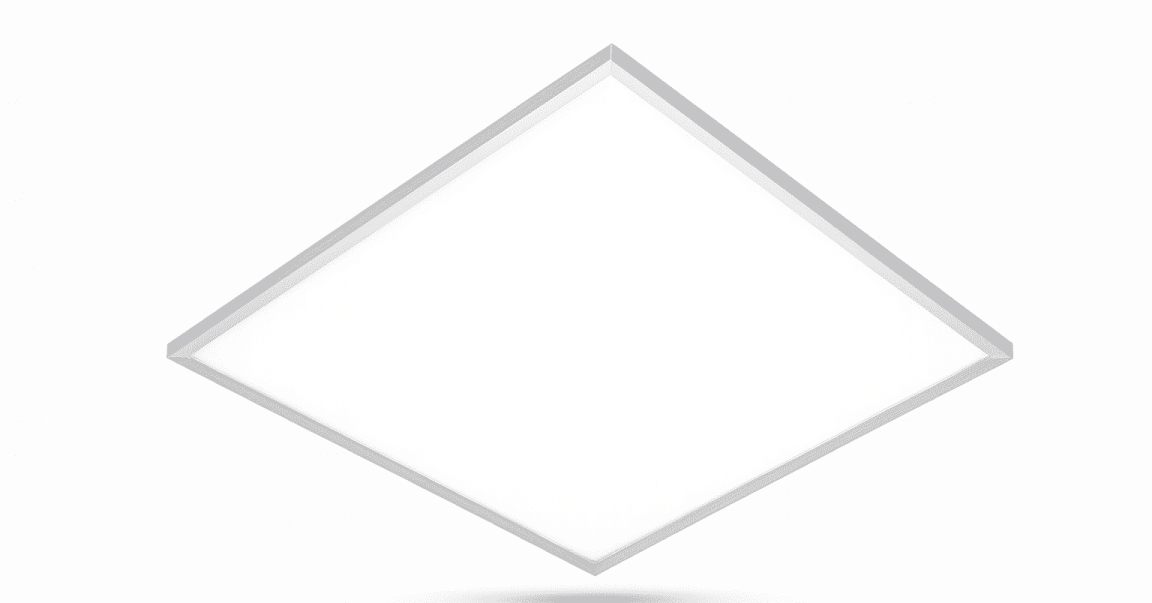
- It is suitable for light-emitting diode flat-panel lamps and lanterns that meet the requirements of CNS 16047, or those that are recognized as flat-panel lamps by the Energy Administration of the Ministry of Economic Affairs.
- Not applicable to table lamps, table lamps, bedside lamps and floor lamps.
- The thickness calculation of flat panel lamps and lanterns must include an external control device, but if the control device is separated, the thickness may not be included.
Commonality and performance requirements
- The power factor (PF) is ≥0.90, and the measured value must be more than 95% of the indicated value.
- Beam maintenance rate:
- 1,000 hours ≥97%
- 3,000 hours ≥95%
- The color rendering index (Ra) is ≥ 80, and it must not be lower than the marked value minus 3, and the special color rendering index R9> 0.
- Photobiological safety: must comply with CNS 16047 regulations and reach the "risk-free level".
- Flicker limit:
- Flicker Index ≤ 0.020
- Percent Flicker ≤ 2.000%
- Brightness limit: The average brightness should be lower than the reference specified in CNS 16047.
Energy efficiency benchmark
- Medium and low color temperature (<5000K): luminous efficiency ≥130 lm/W.
- High color temperature (≥5000K): luminous efficiency ≥140 lm/W.
- The measured luminous efficiency must reach more than 95% of the indicated value to ensure that the marking is consistent with the actual situation.
Energy efficiency test conditionswithTest method
- The test is carried out in accordance with the provisions of CNS 16047, and the light distribution test is carried out in accordance with CIE 70, 84, and 121. The angle spacing must be ≤2.5°.
- The test conditions of dimmable or color temperature-adjustable products shall be implemented in accordance with the provisions of CNS 15630.
- The test report must be issued by a laboratory certified by CNS 17025.
- The test conditions are carried out in accordance with CNS 16047 (Performance requirements for LED flat panel lamps and lanterns) specifications.
- The measurement of luminous flux and light distribution shall be performed in accordance with CIE70, CIE84, and CIE121, and the angle spacing shall be ≤2.5°.
- Dimmable or color temperature-adjustable products are tested in accordance with CNS 15630 (adjustable lighting test method).
- All test reports must be issued by a laboratory certified by CNS 17025 to ensure that the data is credible and consistent.
Product labeling requirements
Products and catalogs need to be clearly marked:
- The user name and address of the energy-saving mark.
- If it is sold by an agent, the manufacturer's name and address should be marked at the same time.
- The following information should be disclosed in the catalog or product:
- Rated power, total luminous flux, color rendering, color temperature, luminous efficiency, power factor
- Plane pitch-to-height ratio (C=0°-180°, C=90°-270°)
- Photobiological safety, flicker index and flicker percentage
Jinghong recommends
- Introduce test planning in advance: there are many energy efficiency and optical test items for flat panel lights. It is recommended that manufacturers complete sample testing half a year in advance.
- Integrate the product development process: the power factor, flicker and color temperature control requirements are included in the design stage to reduce the risk of retest.
- Complete documents and faster delivery for review: Jinghong Inspection has the energy of a CNS 17025 certified laboratory, and provides one-stop services for energy efficiency, optics, and marking document guidance.
Jinghong Inspection will continue to track the latest regulatory developments and provide complete product testing and compliance advice services to help the industry successfully respond to the requirements of the new version of the recognized benchmark.
Extended learning(Audio-visual version)
If you want to quickly grasp it by listening, we have also compiled a complete audio and video commentary.:
Disclaimer
This article is for industry information reference only and does not constitute legal or technical advice. Please refer to the official announcement of the competent authority and the original text of the official regulations.
For inquiries, please contact: Ms. Wang, JHEt (05)599-0970~72
Email: [email protected]