Regulatory basis
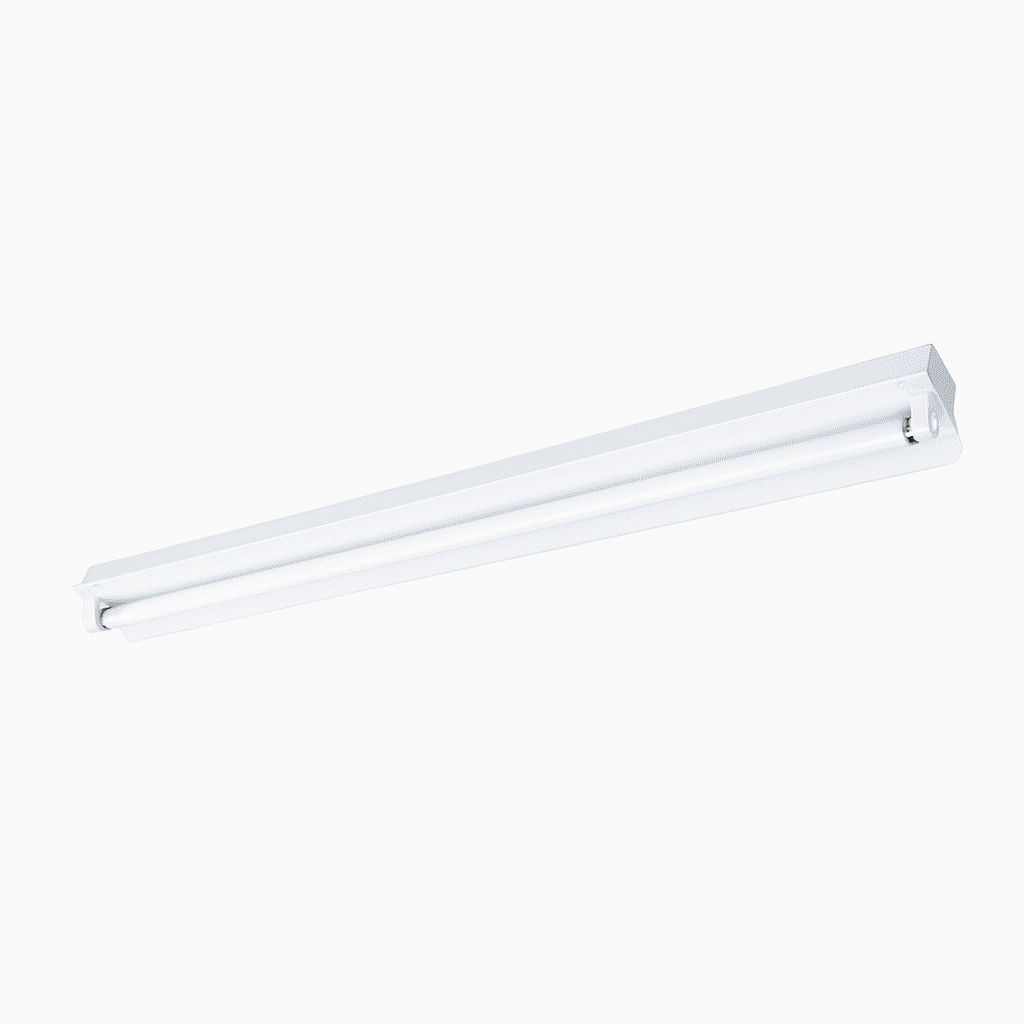
According to the announcement of the "Energy Efficiency Benchmark and Marking Method for Energy-saving Marking of Open Lamps and Lanterns" by the Energy Administration of the Ministry of Economic Affairs in 2024 (September 4, 113 of the Republic of China), it will be officially implemented from the date of the announcement. This announcement clearly defines the scope of application of open lamps and lanterns, and proposes unified specifications for luminous efficiency, photobiological safety, flicker control and marking requirements, which have a far-reaching impact on high-use electric fields such as commercial offices, warehousing and industrial lighting.
📎 Regulatory link:Energy-saving labels for open lamps and lanterns, energy efficiency benchmarks and marking methods
Scope of application
- Open lamps and lanterns suitable for indoor use, including mountain lamps, fortifications lamps, Middle-Eastern lamps, bracket lamps, laminate lamps, linear lamps, etc.
- Those who meet the standards of CNS 14335, CNS 14115, and CNS 15592 or are approved by the competent authority.
- Lamps and lanterns that have been announced with energy-saving marks (such as indoor lighting, flat panel lights, patio lights, downlights and embedded lights) are not applicable to this benchmark.
Energy efficiency benchmark
- The luminous efficiency (lm/W) is ≥150 lm/W.
- The measured value must reach more than 95% of the indicated value.
- The power factor (PF) is ≥0.90, and the measured value must be more than 95% of the indicated value.
- Color rendering (Ra) ≥80, special color rendering index R9> 0.
Photobiological safety and commonality requirements
- Photobiological safety must comply with CNS 15592 "No risk level".
- Beam maintenance rate: 1,000 hours ≥97%; 3,000 hours ≥95%
- Flicker index: Flicker Index ≤ 0.05; Percentage Flicker ≤ 5%
Test method
- The test conditions are tested for light intensity distribution according to CIE 70, 84, and 121 standards, and the angle spacing is ≤2.5°.
- Color temperature and color rendering are tested according to CNS 15437, CNS 15497 or CNS 16047.
- The luminous flux is subject to the measurement results of goniometric photometry.
Product labeling requirements
Products and catalogs need to be clearly marked:
- Energy-saving mark user name and address
- If it is sold by an agent, the manufacturer's name and address must be marked at the same time
- Rated power, total luminous flux, color rendering, color temperature, luminous efficiency, power factor, photobiosafety, flicker index and flicker percentage
Jinghong recommends
- Early sample delivery for testing: open lamps and lanterns are diverse and have large structural differences. Light efficiency and flicker tests should be arranged as soon as possible.
- Simultaneous inspection of safety compliance: ensure that the product complies with CNS 14335 and 14115 standards at the same time.
- Integrated testing and documentation: Jinghong inspection provides guidance on CIE and CNS standard testing, optical performance analysis, and energy-saving marking documents to assist manufacturers in completing inspections and energy-saving applications at once.
Jinghong Inspection will continue to track the latest regulatory developments and provide complete product testing and compliance advice services to help the industry successfully respond to the requirements of the new version of the recognized benchmark.
Extended learning(Audio-visual version)
If you want to quickly grasp it by listening, we have also compiled a complete audio and video commentary.: